
Oil and gas operators make thousands of commercial decisions every year, from drilling services and completions equipment to production chemicals and midstream construction. Each decision carries cost, schedule, and safety implications. Competitive bidding creates a structured way to invite multiple qualified suppliers to propose their best solution and price for a defined scope, then select the offer that delivers the greatest value. When procurement, supply chain, and operations teams adopt a disciplined competitive bidding process, they improve cost control, strengthen governance, and accelerate execution across the field.
But what exactly does competitive bidding mean, and why is it so critical for operators and service companies? This guide explores the concept, process, benefits, and challenges of competitive bidding in oil and gas—and how modern bid management software can transform your approach.

Competitive bidding is a procurement method where an operator publicly or selectively invites multiple suppliers to submit proposals to deliver a defined scope of work or materials. Bids are evaluated against transparent criteria such as price, technical fit, HSE performance, delivery schedule, past performance, and ESG considerations. The core objective is to create a fair process that produces a competitive bid from each supplier and a defensible award for the operator.
In oil and gas, the stakes are high. A single fracturing program, recompletion or pipeline tie-in can involve multimillion dollar commitments. Competitive bidding introduces price tension, reduces information asymmetry, and gives operators a clear audit trail of why a supplier was selected. It also helps service companies sharpen their proposals, showcase differentiators, and compete on more than cost.
Competitive bidding matters for four practical reasons:

While every operator tailors its approach, most follow a repeatable competitive bidding process:
Modern operators use bid management software to standardize each step, reduce manual effort, and keep communications in one place. Centralization speeds cycle time, prevents version chaos, and creates the audit trail leadership expects.
Selecting the right types of bidding formats is a strategy decision that depends on the complexity of the scope, the maturity of the supplier market, and project risk. Understanding bid types helps operators select the most effective approach:
By matching the types of bid to the category, operators balance competition, speed, and risk. In practice, many teams maintain a portfolio approach: catalog pricing for routine materials, restricted two stage events for critical services, and occasional open events to refresh the market.

A well-run competitive bidding program delivers tangible gains:
Cost and commercial performance
Multiple bids create price tension and expose outlier rates, allowing procurement to negotiate with data. Side-by-side comparisons reveal total cost, including mobilization, demobilization, contingencies, and warranty terms.
Transparency and fairness
Defined criteria, structured Q&A, and consistent communications produce an audit trail that withstands internal reviews and external audits. A structured process reduces favoritism and “handshake deals” while ensuring compliance.
Supplier performance and innovation
Competition motivates suppliers to differentiate on service quality, technology, and speed. Scorecard-based evaluations promote continuous improvement and highlight best value partners.
Risk reduction
Comparing multiple options reduces dependence on a single supplier, surfaces schedule risks, and highlights gaps in technical capability before award.
Competitive bidding is powerful, but it doesn’t come without challenges:
Time-consuming process
Managing RFx documents and evaluating bids manually can delay projects, especially if an operator is relying on fragmented emails and spreadsheets for bid comparison. Operators benefit from standardized templates and a central platform to control timelines and increase visibility.
Data quality and quote parity
If suppliers quote with different units, inclusions, or assumptions, apples-to-apples comparison is impossible. Clear bid forms, required fields, and normalization rules solve this.
Compliance and ESG
Procurement must apply consistent award rules and capture environmental, social, and governance criteria alongside price and technical fit. Scorecards help make ESG weightings explicit and defensible.
Supplier relationships
Overfocusing on lowest price can strain partnerships. The best programs balance price with performance, safety, and reliability, and share post event feedback to build trust.
Enverus RFx is purpose‑built bid management software for oil and gas that brings RFx creation, supplier engagement, evaluation, and awards into a single intuitive application. It is designed for both supply chain and operations teams, requiring minimal training and enabling rapid event setup. Key features include:
These capabilities aim to reduce bid cycle time, increase transparency, and help category managers achieve performance goals without overburdening field teams.
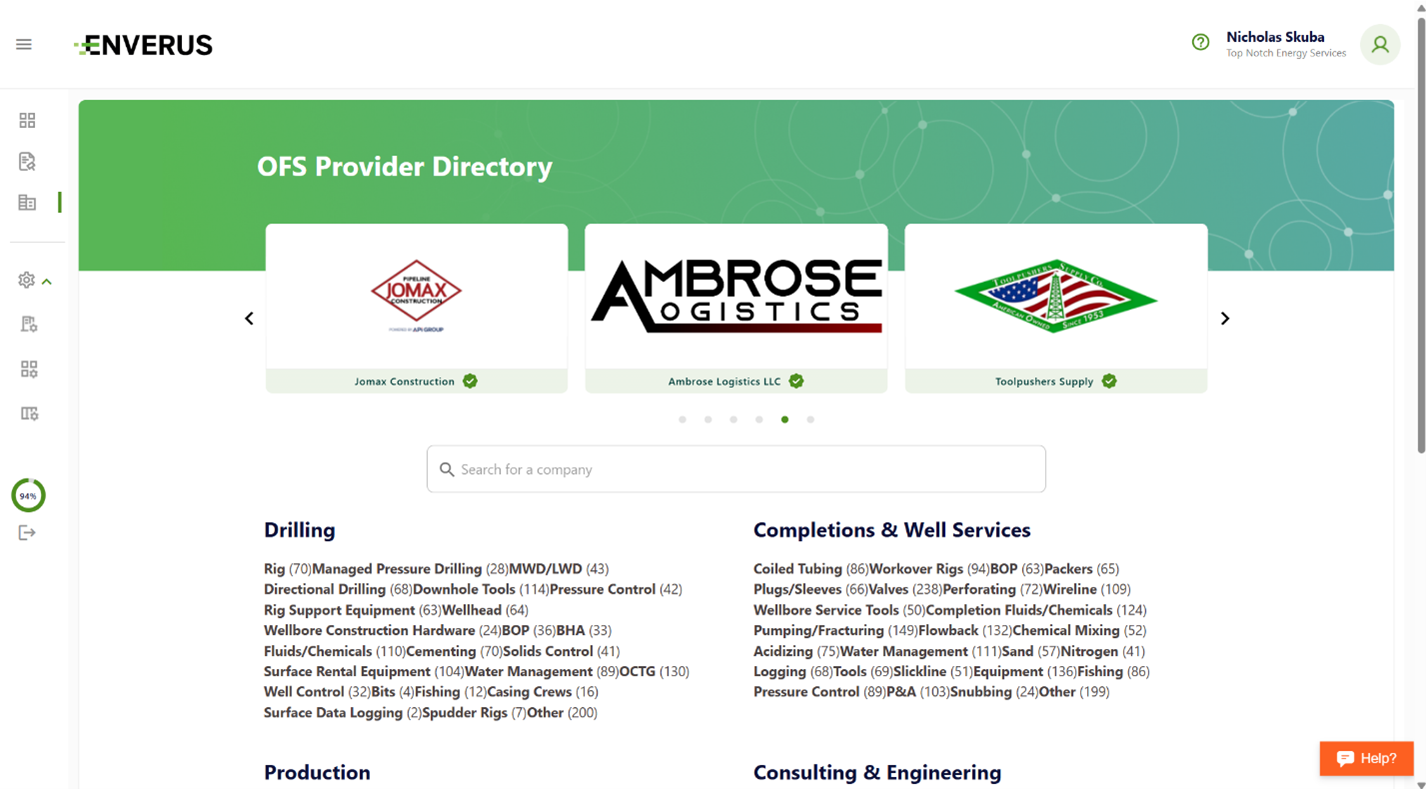
Competitive bidding is more than a cost exercise. It is a governance framework that aligns operations and supply chain around defined standards, transparent communications, and defensible awards. When operators standardize the competitive bidding process and deploy bid management software designed for oil and gas, they create a faster path from scope to award with fewer surprises in the field.
If you are building or modernizing your program, explore Enverus RFx for oil and gas procurement to simplify event creation, engage suppliers effectively, compare bids side by side, and document every decision in a searchable audit trail.
What is competitive bidding?
Competitive bidding is a structured procurement method where an operator invites multiple qualified suppliers to submit proposals for a defined scope, then evaluates responses against transparent criteria to select the best value. In oil and gas, it strengthens governance, improves cost control, and accelerates field execution through clear rules, Q&A parity, and side-by-side comparisons.
Why is competitive bidding important?
It matters because it produces defensible awards, creates current market benchmarks, and motivates suppliers to compete on price and performance. A documented process with uniform communications and a searchable audit trail supports compliance and leadership oversight.
What are the types of bids?
Common formats include open bidding, restricted or prequalified bidding, two stage bidding, sealed bids, reverse auctions, and framework or catalog bids. Operators choose based on scope complexity, market maturity, and risk. Reverse auctions suit commoditized materials. Two stage bidding fits complex services where technical capability is the gate.
What is bid management software?
Bid management software standardizes RFx creation, supplier engagement, evaluation, and award in one system. The goal is to reduce manual work, keep communications centralized, enforce quote parity, and create a complete audit trail.
How do service providers find bidding opportunities?
Service providers discover opportunities by joining supplier directories, monitoring operator portals, and subscribing to digital procurement networks that publish RFx events.

Purchase order automation has the power to relieve oil and gas operators and OFS companies of many headaches in the procure-to-pay process. Energy companies continue to manage the procurement process using tedious, manual workflows that result in the same issues...

Understanding the timing of each stage of preproduction, known as efficiency metrics, is imperative for having confidence in forecasting cycle times of operators and service companies. This helps ensure equipment is fully utilized and groups know what’s needed for each...

The current state of carbon capture, utilization and storage (CCUS) is dominated by the supermajors and large midstream companies who can afford to absorb risks in this emerging market. CCUS project developers are forging ahead without the typical commitments between...

Saying the energy industry — an industry accustomed to challenge and change — has been rocked over these past few years is probably an understatement. Pandemics, wars, wildly variable oil futures, rapidly changing energy policies and inflation have quickly increased...

Part 1: Pinpointing CO2 emitters Global alignment on net zero policies, Wall Street sentiment, and large tax credits from the U.S. and Canadian governments for carbon capture investment, are leading to exciting new opportunities for historically midstream service providers. Dominated...
Save time with automated price validation workflows and optimize spend with price compliance reporting and spend analytics.
OpenOrder, a purchase order software made for oil and gas, increases spend visibility and controls without burdening operations, with flexibility to issue, approve and track procurement of services and materials with a purchase order.
Gain complete inventory oversight. Track the quantity and value of inventory by location and accurately log material transfers in your accounting system.
Enverus RFx is an AI-powered sourcing solution that simplifies bid management, expands supplier networks and provides transparent insights into pricing and activity. Streamline procurement and focus on your bottom line with Enverus RFx’s advanced technology.
Accelerate invoice approvals and payment with cloud-based digital field ticket management.
Digitize and automate invoice processing and approvals with oil and gas enterprise accounts payable software.
Save time and reduce costs with a single streamlined solution to handle joint venture and AP invoice approvals in one system.
With Enverus Instant Analyst™, you receive answers you can trust, delivered in seconds. Sourcing from 25+ years of vetted data and research on the most trusted SaaS platform designed exclusively for energy.
Outsource mineral phone and print and mail, so your land and accounting teams can focus on critical work.
EnergyLink software provides secure and convenient online access to oil and gas owner statements and account information — available 24/7.
Enverus consulting services are provided by a team of technology experts, designed to optimize customer usage and maximize ROI of their OpenInvoice solutions.
Let’s get started!
Let’s get started!
We’ll follow up right away to show you a quick product tour.
Ready to Subscribe?
Ready to Get Started?
Ready to Subscribe?
Sign Up
Power Your Insights