
Energy Analytics

A Modest Proposal for Small Operators

byMark Nibbelink

COVID-19 Focused Investments: Publicly Traded Companies


Investor demands for showing free cash flow and capital discipline have been met with oil and gas public equities tamping down their capex spend, hunkering down to wait for WTI to appreciate enough to start completing DUCs and bringing their supplies to market, and consolidating in mergers or buyouts.

Lost in all the analysis, however, is the fate of the small, privately held operators, that don’t have access to the public equity markets or indulgent lenders who will get them through hard times.


Well Production


Consider this — of the 627,520 active wells in the U.S., about half of them are stripper wells that produce 15 barrels of oil per day or less. These wells are within about 13,000 distinct fields.
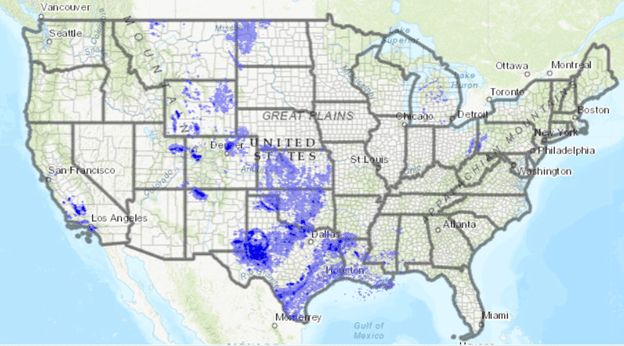
Well Search Results: Offers, Provides and Enhances. Source: Enverus


Constraining the wells to their most recent monthly production from Aug. 1, 2020 to Nov. 1, 2020, then summing their production, these wells account for approximately 27 million barrels (not including Indiana, Illinois or states that report on a year-behind basis). This represents just under 10% of the total production of active wells that produce above the stripper threshold of 15 BOPD.

No doubt a significant fraction of these wells is operated by large companies that have the financial wherewithal to attempt to ride out current conditions, but what about the rest? What can they do to keep themselves in business, both now and in the future? With prices where they are now and are projected to be through much of 2021, they’re not going to raise capital to go horizontal. They’re probably not going to be drilling any field expansion wells and may struggle to fund workovers. They may get some government stimulus relief to help short term, but that won’t address their long-term issues.


Banding Together


Although our industry has always valued and honored rugged individualism, there is merit in the idea of small operators in the same basin considering creating cooperatives — or at least banding together — to create some economies of scale that could allow them to reduce their costs by buying in bulk.

Consider that Gazprom Neft is dedicating gas supplies to power turbines to generate electricity for mobile crypto mining enterprises. A cooperative of small operators in a gas rich basin could theoretically pool their gas through trucked CNG to a central turbine location and generate electricity for either sales to the electric grid or for on-location use for crypto mining, or they could sell the gas to an efrac outfit completing wells on a pad currently lacking power or lease gas. They could even do a deal to truck their gas to well-positioned electric vehicle charging locales where their gas could be combusted in a gas turbine to charge on-site battery packs.

Supervisory control and data acquisition systems controls could reduce pumping and gauging costs for small oil operators, especially if they can be transacted through a bulk buying process.

A small operator cooperative could fund drone operations to conduct lease overflights to inspect lease conditions in remote locations to ensure equipment integrity.


Potential Benefits of Banding Together


Assuming ESG concerns become more prevalent, and carbon capture and sequestration needs more pronounced (especially under the new Biden administration), small operators should begin the process of determining the capacity of their reservoirs to store not only CO2 but hydrogen as well. Banding together will give small operators a chance to compete in the current and, more importantly, new energy economy. If they can see their asset base as a resource that has value beyond the straight sale of barrels or Mcf to gatherers, they might get through the current chaos in the business.

Please send any comments to me at mark.nibbelink@enverus.com.

 

Picture of Mark Nibbelink

Mark Nibbelink

Mark Nibbelink is co-founder and director of university outreach at Enverus. Before co-founding Enverus (formerly Drillinginfo) in 1999, Mark had a long career as a prospect geologist at Gulf Oil before beginning work as an independent geologist. Mark is responsible for quality control and data integrity. He received his Bachelor of Arts in geology and his master’s in geology and geophysics from Dartmouth College.

Subscribe to the Enverus Blog

A weekly update on the latest “no-fluff” insight and analysis of the energy industry.

Related Content

Enverus Press Release - Class VI wave expected to hit US
Energy Market Wrap
ByEnverus

BP delivers strong 2025 results, Oxy boosts onshore efficiency, ConocoPhillips advances Surmont, Whistler sanctions Bay Runner, and Kinetik explores a potential sale.

Enverus Press Release - Heightened natural gas price volatility expected amid supply and demand challenges
Energy Transition
ByNoor Qureshi

The clean fuels story has turned a corner. EIR’s 2026 Clean Fuels Fundamentals finds an industry in recalibration: credit exposure, policy clarity and margin durability have replaced breakneck expansion as the sector's defining priorities.

Enverus Intelligence® Research Press Release - Canada’s Montney and Duverney: North America’s most abundant unconventional resource plays
Analyst Takes Trading and Risk
ByAl Salazar, Enverus Intelligence® Research (EIR) Contributor

Alberta's economy frequently grapples with the inherent volatility of oil prices, a challenge that can significantly impact provincial coffers and lead to substantial deficits.

U.S. oil and gas M&A slumps as low crude prices keep buyers in the dugout
Business Automation
ByIan Elchitz

Accounts Payable in oil and gas has never been more important. AP teams are under increasing pressure to reduce disputes, close faster, improve accuracy, and provide confidence in spend. Many organizations have invested heavily in AP automation and process improvement,...

Enverus Press Release - Enverus releases “2025 Interconnection Queue Outlook” to navigate backlogged grid challenges
Power and Renewables
ByEnverus

During the last week of January, the PJM Interconnection was operating in the immediate aftermath of the January 23–27 winter storm Fern, which occurred within the broader January–February 2026 North American cold wave. The storm brought widespread snowfall and prolonged...

Enverus Intelligence® Research Press Release - Waha prices expected to go negative (again)
Energy Transition
ByAdam Robinson, Enverus Intelligence® | Research (EIR) Contributor

Explore the Smackover’s shift from lithium curiosity to competitive basin, as CVX, XOM and others expand DLE-focused acreage, pilots and offtakes.

Enverus Intelligence® Research Press Release - Wood you believe it? BECCS is taking off and creating overlooked, lucrative opportunities
Energy Market Wrap
ByEnverus

This week’s energy headlines spotlight Ovintiv exits the Anadarko, SM sells Eagle Ford acreage, Comstock ramps Haynesville activity, CNX extends note maturities, and Aramco signs on at Commonwealth LNG.

Global gas, LNG, Haynesville and Permian outlooks reveal key trends in production, pricing and infrastructure expansion
Power and Renewables
ByEnverus

Power Has Become the Primary Constraint on Hyperscale Growth  Hyperscalers are entering the largest capital deployment cycle in the history of the technology sector. AI-driven workloads are accelerating data center development at unprecedented speed. As cited in a recent pv...

Enverus Press Release - Enverus releases inaugural Top US Drillers and customer rankings
Minerals
ByTemi Oyetayo

Explore today’s mineral transaction challenges and learn how digital platforms bring transparency, trusted data, and direct connections to buyers and sellers.

Let’s get started!

We’ll follow up right away to show you a quick product tour.

Let’s get started!

We’ll follow up right away to show you a quick product tour.

Sign up for our Blog

Ready to Subscribe?

Ready to Get Started?

Ready to Subscribe?

Sign Up

Power Your Insights