Part 2: How to uncover opportunities with data analysis
The first article of this series discusses the importance of detailed days sales outstanding (DSO) analysis and correlation to revenue generated for streamlined business processes, improved cost savings, and more informed strategy adjustments. This second article shows how leveraging your internal financial data with Enverus oil & gas datasets, including well design, financials, geology data, and more, provides a complete picture for opportunity identification, risk assessment, and strategic planning. Enverus is uniquely positioned to incorporate our proprietary datasets and intellectual capital to establish a true cause and effect relationship between trends and data to enable a data-driven decision-making process.
We’ve worked with several oilfield services (OFS) customers during different OpenInsights engagements, combining these datasets together to create a custom process for each engagement. Below is an example of one engagement where Enverus created a risk profile to build a strategy for a downhole equipment company whose products are designed for specific depths and geologies.
The company looked to answer the following questions:
- How many wells are expected to be drilled in the specific geology?
- How many wells would have the ideal well design ranges?
- Where and when are these wells expected to come online?
- Which operators are most likely to fit the above criteria and be most likely to work on these wells?
Metrics for operator risk profiles
We assessed the total available market for these products based on well design, geology, and operators. Blending the variables behind each of the metrics below creates an integrated risk profile for each operator. The downhole equipment company can use this to create a targeted and effective strategy towards identifying opportunity and growing market share.
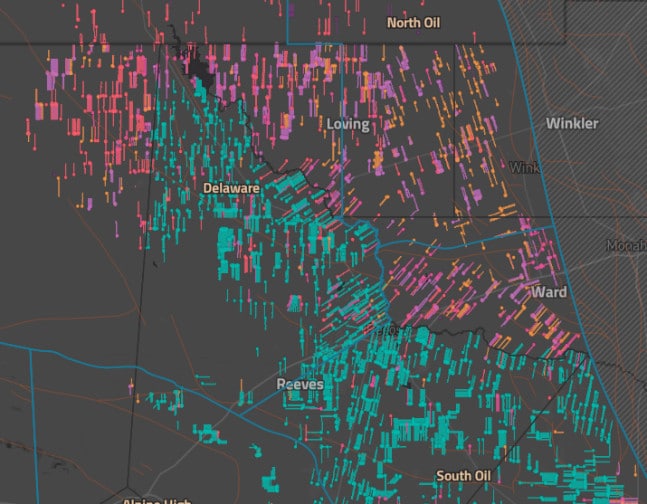
- Well Design and Geology Risk: Risk based on historical and expected development design and geology as it relates to the target values. This was developed by combining Enverus basin models data to identify areas and wells in similar geology to the targeted formation.
- Activity Risk: Risk associated with inventory of permits, leases, and rig activity in the core region. This was developed using recently filed permits and leasing trends in the target geology, target customers’ financial metrics, and IRR reports.
- External Financial and Productivity Risk: Risk associated with the company’s hedge position, stock performance, CAPEX targets, and other information gathered through IR presentations and other announcements. We identified core areas of development for operators with good hedge positions that made public statements about targeting those areas. Stock performance were also key.
- Productivity Risk: Risk associated with the operator’s production targets and well performance. We used both regional break-evens and rig information to de-risk areas of development and get a better understanding of available inventory.
- Internal Financial Risk: Risk associated with the operator’s current relationship with the service company, revenue share, DSO cycles, existing relationship history, etc. Existing clients were rated as lower risk since relationships already exist, creating easier avenues for growth opportunities.
The chart below shows the risk profile, based on these five variables, provided by the OpenInsights analyst team:
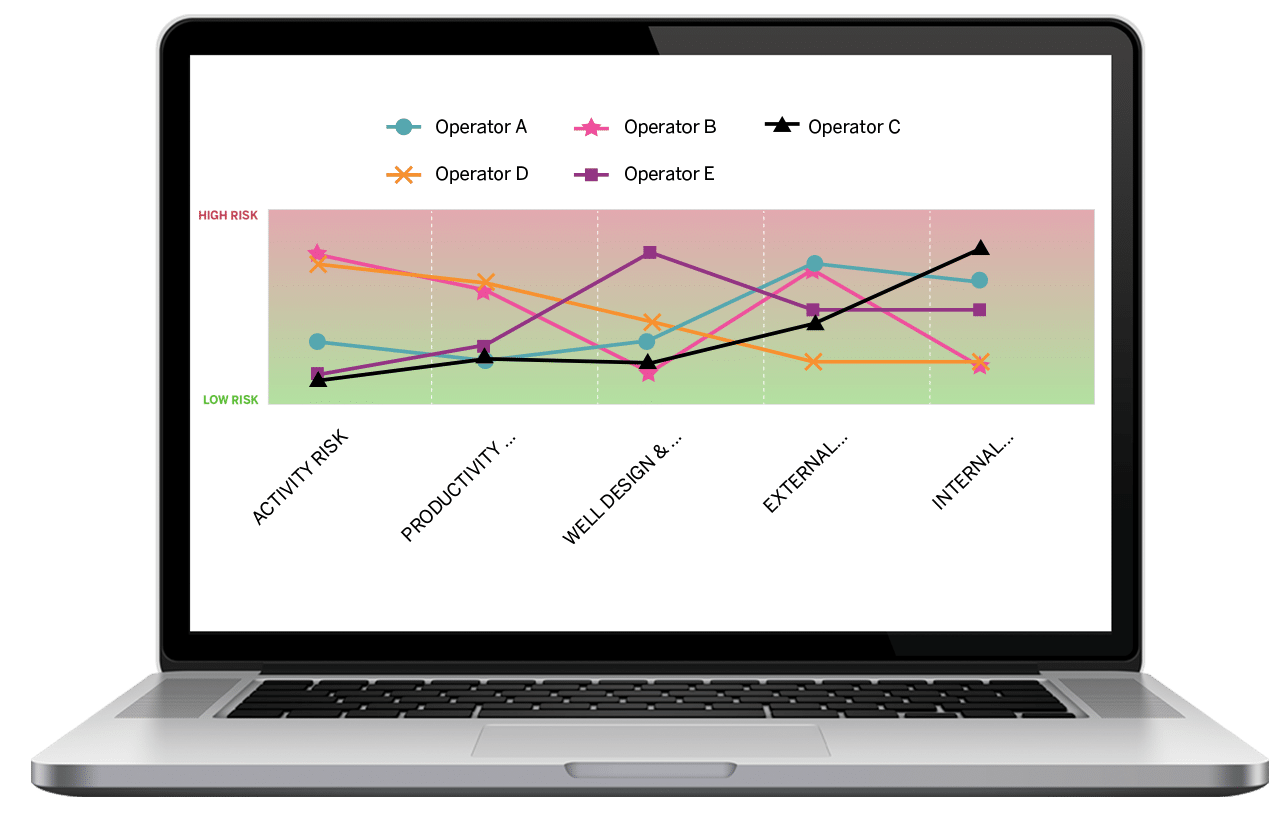
The priority of each risk segment would be driven by the strategy adopted by the service company. However, a few interesting trends emerge:
- Operators A, C, and E: These operators present relatively low activity and productivity risk and similar external financial risk. Most of Operator E’s inventory seems to not be in the target geology or well design for the group of products the service company needs to sell.
- Operator D: This operator is in the best financial health and has a low risk with the internal financial numbers for the service company. However, high risk in activity and productivity might suggest a passive development strategy. Continue to engage customer since that business decision might be susceptible to change with the changing environment.
- Operators A and C: These operators are the immediate best targets; focus on improving internal financial processes with Operator C.
This isn’t inclusive of all the various methods leveraged by service companies to maximize business efficacy in this market, but it does provide insights into some of the moves being made by marquee players in the industry. As the industry repositions to tackle the new challenges, we expect more and better versions of an integrated analysis approach by key players to not just survive, but thrive, in any market condition.
To be defensively opportunistic, you must understand your business
Market share capture, risk mitigation, and proper capital allocation are essential areas of focus for OFS to counter the volatility of the oil industry. You cannot develop an effective defensively opportunistic strategy without understanding your business. Enverus is uniquely positioned to assist OFS companies in obtaining customized insights that help them streamline operations, optimize cash flow, and create an effective strategy to find opportunities and grow market share.
Learn more about OpenInsights for Suppliers at https://www.enverus.com/products/openinsights-for-suppliers/ or email us at businessdevelopment@enverus.com.