What are some of the challenges grid operators face in the clean energy transition and what are some practical solutions?
The record pace of renewable energy capacity installation around the world is presenting unique challenges for power grids in integrating intermittent generation.
Power grid operators must come up with innovative solutions to manage renewable capacity and adopt smart systems to balance supply and demand in the most efficient way possible.
In this article, we look at the challenges grid operators face in integrating renewables and some of the potential solutions to overcome these challenges.
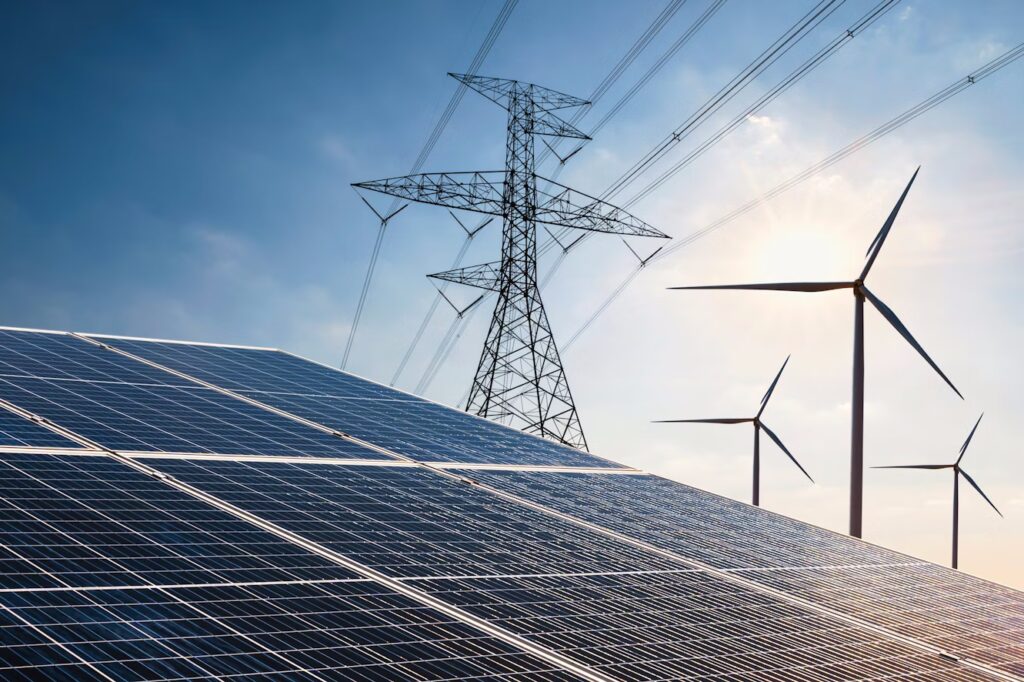
Interconnected Power Grids Span Vast Distances
Many of today’s electricity grids were designed in the 20th century when there was limited distributed energy capacity. They have grown on an ad-hoc basis as power consumption has increased with economic development.
The distinction of the world’s largest power grid depends on whether it is measured by installed generation capacity, transmission network length or distribution network length. Depending on the metrics, the largest grids are in North America, China and Europe.
The North American grid incorporates six regional entities across the continental U.S., the interconnected border provinces in Canada, and part of Baja California, Mexico. The interconnected grids are tasked with balancing energy supply and demand, managing security and making the transition to digitized systems that will enable smart grid management and coordination.
According to the Independent Electricity System Operator (IESO), which manages the power grid in the province of Ontario, Canada, the North American power grid “is a vast, interconnected network serving almost 400 million consumers across the continent, and is sometimes referred to as “the world’s largest machine.”
On the other side of the world, China’s power grid is incredibly far-reaching and the grid operator, the State Grid Corporation of China (SGCC), is building massive transmission lines as it aims to interconnect with the grids of its neighboring countries into a super grid. The SGCC has built the world’s longest single transmission line with the world’s largest transmission capacity. The Changji-Guquan ultra-high-voltage direct current (UHVDC) line is 3,324km long and has the capacity to transmit up to 12GW of electricity.
The SGCC plans to install more UHVDC lines as it increases electrification across its vast territory and as part of its Belt and Road Initiative — a network of power lines, railways and roads throughout Asia and beyond.
China’s power distribution is complicated by the large distances between its major generation sources and its cities. But UHVDC networks allow for renewable generation to be distributed quickly over long distances. For instance, in December 2020, the SGCC put a 1,587km UHV line into operation between Qinghai province in the north and the central Henan province. It was the first UHV line in the world built solely to transmit renewable electricity, the SGCC said. The line enables more renewable capacity to be installed in Qinghai and Gansu provinces while delivering power supply to the population centers in Henan.
A report by researchers from the Earth System Research Laboratory published in Nature Climate Change found that the U.S. could benefit from similar projects, as installing UHV lines could cut emissions by as much as 80% by transporting electricity from states with abundant wind power such as Wyoming to heavily populated states such as California.
Solutions to Today’s Power Grid Challenges
Grid operators face complex challenges in managing the energy transition while ensuring that their networks remain secure and deliver electricity without disruptions. Here are five challenges and potential solutions.
1. Variability and unpredictability of renewables
Forecasts suggest that 62% of global electricity will be generated by renewables by 2050, up from 27% in 2019. This will make it increasingly difficult for grid operators to plan and manage power flows effectively and avoid grid imbalances.
Solution: To manage this variability, power grid operators need to develop forecasting models that can accurately predict renewable generation based on weather patterns. Smart energy management solutions such as forecasts powered by artificial intelligence can improve prediction systems, and along with battery storage systems, can help power grid operators balance electricity supply and demand so that grids remain stable.
2. Grid modernization
Many transmission and distribution lines around the world are reaching the end of their lifespans. Distributing electricity over long distances causes significant energy losses in the form of heat, which only increase as the lines age. However, installing new lines to modernize grid infrastructure is costly. The integration of renewable systems in areas away from traditional power plant locations also requires the construction of new power lines.
Solution: Encouraging the adoption of distributed systems such as rooftop solar panels and small wind turbines enables households and businesses to produce their own electricity to meet their consumption needs, reducing the amount of electricity that flows through the power grid. This in turn reduces transmission losses and extends the lifespan of burdened power lines. Grid operators need to work closely with policymakers to adopt new regulatory frameworks for infrastructure development.
3. Frequent power outages
Extreme weather conditions are common causes of blackouts in places such as the U.S. and Australia, while an aging power system is causing an increasingly severe energy crisis in South Africa. Extended power outages can disrupt businesses, as well as damage electronic devices and cause the loss of important data.
Solution: Backup sources and distributed systems, such as battery storage for renewable generation, can ensure that power supply remains uninterrupted.
4. Electromobility
The adoption of electric vehicles, while reducing carbon emissions from internal combustion engines, introduces a new source of demand for electricity supply from power grids.
Solution: Smart grids can manage connected devices such as EV chargers, solar panels, batteries and other equipment using data analytics in real time to ensure that the equipment that is most in need receives supply. In addition, grids can install tap changers, switching capacitors and line regulators as well as battery storage to manage bi-directional power flows and limit to limit significant voltage fluctuation on the grid.
5. Security threats
Digitalization of the energy sector increases its vulnerability to cyber and terrorist attacks, which surged in 2022. Lithuania’s state-owned energy group Ignitis, Ukraine’s state nuclear power company Energoatom, and Greece’s largest natural gas supplier DESFA were among the energy companies hit by cyberattacks last year. And there was an increase in physical attacks on power substations in the U.S.
Solution: Microgrids, distributed generation and blockchain databases can help to prevent an attack from a single point disrupting the entire energy system.
The variability and unpredictability of renewable energy sources, the need to develop new infrastructure, the impact on the stability of the power grid, and security of supply are among the challenges that power grid operators face. However, by working closely with technology providers, policymakers and stakeholders, operators can navigate the clean energy transition to implement smarter, more efficient grids.
Streamline Substation Engineering Design for Faster Grid Integration
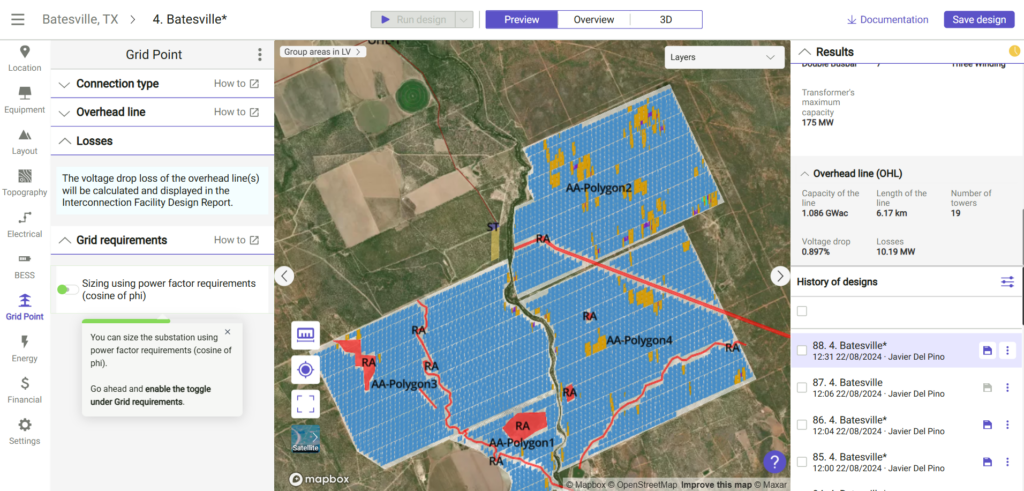
Aside from just PV and BESS project design, Enverus RatedPower can quickly design step-up substations and optimize your utility-scale plant interconnection with ease. Customize your transformer arrangements, transmission line configurations, and grid requirements to maximize power output and ensure seamless grid integration. Automate calculations for transformer losses, voltage conversion, and substation infrastructure to improve project estimations and cost-effectiveness. Instantly generate editable detailed documentation, including interconnection applications and engineering reports, to expedite approvals and streamline stakeholder collaboration.
Take a product tour today and learn how Enverus RatedPower can revolutionize your PV plant design and interconnection process.