BLM Q3 lease sale results may be a positive indicator for development on federal lands.
On July 24th, the Bureau of Land Management (BLM) announced the finalized results of their Q3 New Mexico oil and gas lease sale. In their triumphant announcement, the BLM suggested that changes to the minimum royalty rate, spawned from the One Big Beautiful Bill Act (OBBB), spurred an increase in investment. The 16 parcels and just over 7,500 acres leased for over $58 million resulted in the “third highest value for highest bid/acre”. This week we’ll use TGS Well Data Analytics to explore how that change in minimum royalty rate could lead to improved development economics to the tune of 5% IRR and $750k per well.
Out of the handful of changes to onshore oil and gas leasing and development in the OBBB, the most significant is likely the reduction of federal royalty rate from 16.67% to a minimum of 12.5%. The BLM expects this to result in 225 additional leases by the end of 2026 and ultimately an additional 160 wells drilled. Notably, this was the largest lease sale in New Mexico in 2025 at 1,955 acres and also had the highest weighted average bid per acre at $29,752/acre.
The 16 parcels, situated predominantly in southern Eddy county, range in size from 40 to 1280 acres. Among wells drilled within the last decade, the primary formations and landing zones being developed are spread across the Bone Spring and Wolfcamp intervals (Fig 1). While the top 3 landing zones by gross oil production are the 2nd Bone Spring sand, Wolfcamp Shale, and 3rd Bone Spring sand, the top 3 landing zones by type-curve oil production are the Wolfcamp A, 2nd Bone Spring sand and 3rd Bone Spring sand (Fig 2). The average horizontal well in this area of the Delaware Basin has a lateral length of approximately 8,250 ft, but in recent years that has increased to 10,000 ft laterals.
According to TGS Well Economics, in terms of well performance, the average capital cost to drill and complete a well in this AOI is approximately $7.35 million, resulting in 25% IRR and $372 thousand NPV10. By updating the baseline royalty rate from an average of 18% down to 12.5%, the average IRR and NPV10 increases by 5% and $750 thousand, respectively. But averages tend to obscure the full impact, so let’s look at an example.
The Bone Yard 11 Fee 011H is a 1st Bone Spring Lime well situated next to a new BLM lease at the far northwest edge of the basin (Fig 3). Using the baseline predicted cost model, we see this well is expected to return a 7.5% IRR and negative $289 thousand NPV10. However, after adjusting the royalty to the new 12.5% baseline, the economics of this well improve to 10.6% IRR and $67 thousand NPV10. It’s too early to determine the full impact, but it’s likely that the decrease in minimum royalty rate, and a handful of other regulatory changes, could have a marginal benefit on the bottom line and open up new acreage to development that may not have previously been economically viable.
For more information about TGS Well Data Analytics or to schedule a demo, please contact us at WDPSales@tgs.com.
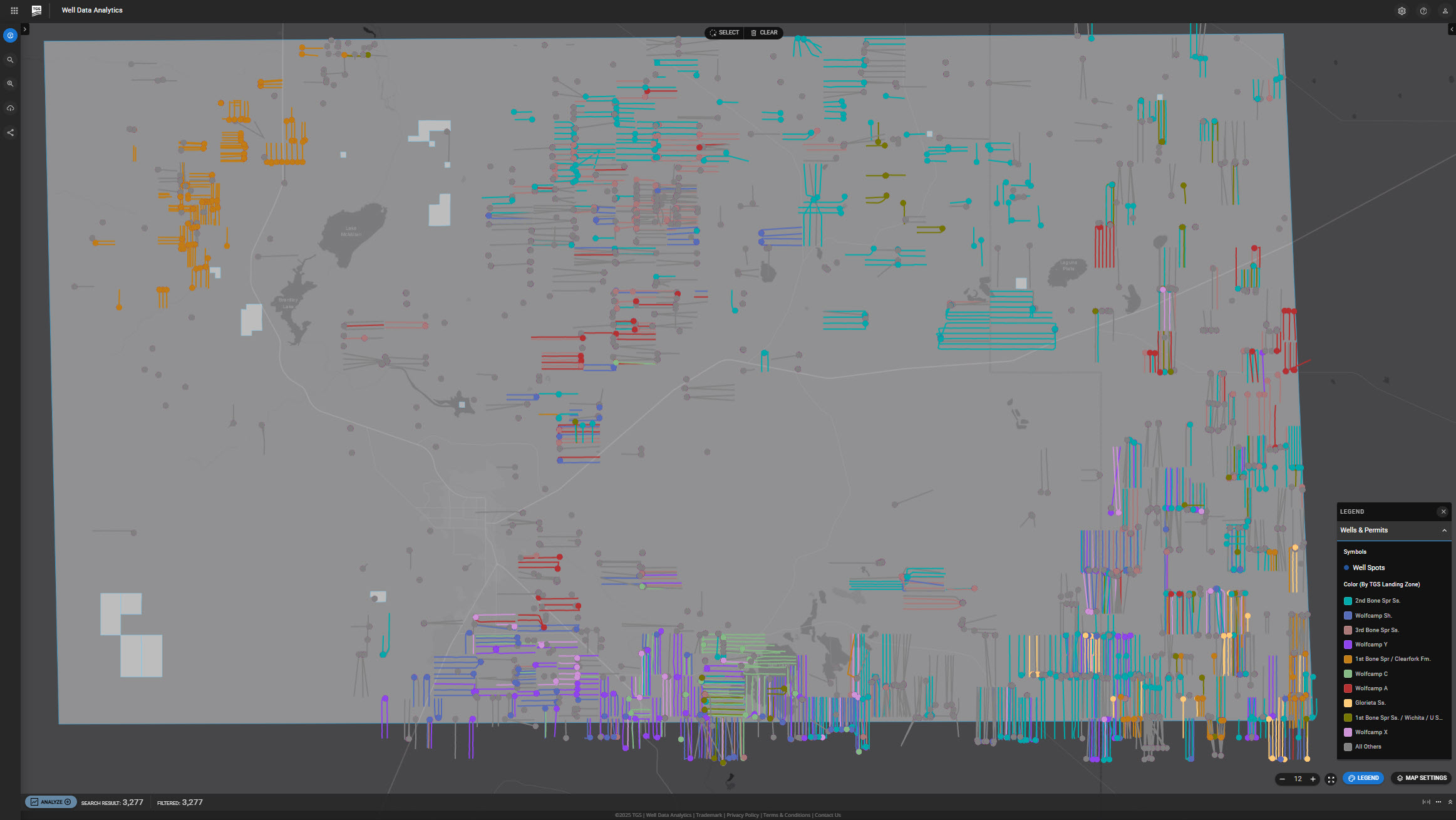
Figure 1. Q3 BLM leases (white polygons) with wells drilled and completed in the last decade, colored by interpreted landing zone.
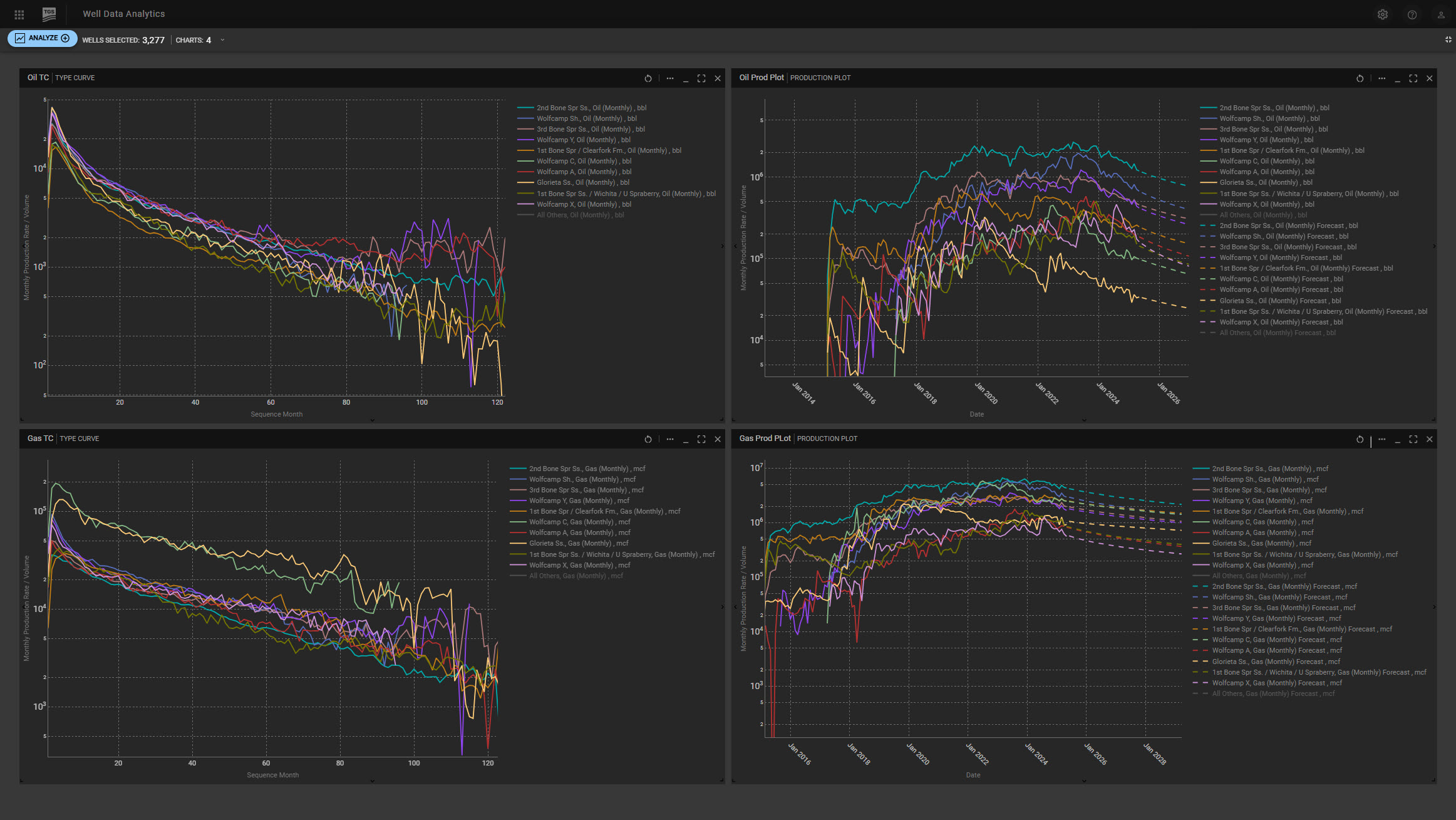
Figure 2. Gross production plots and type curves grouped by interpreted landing zone.
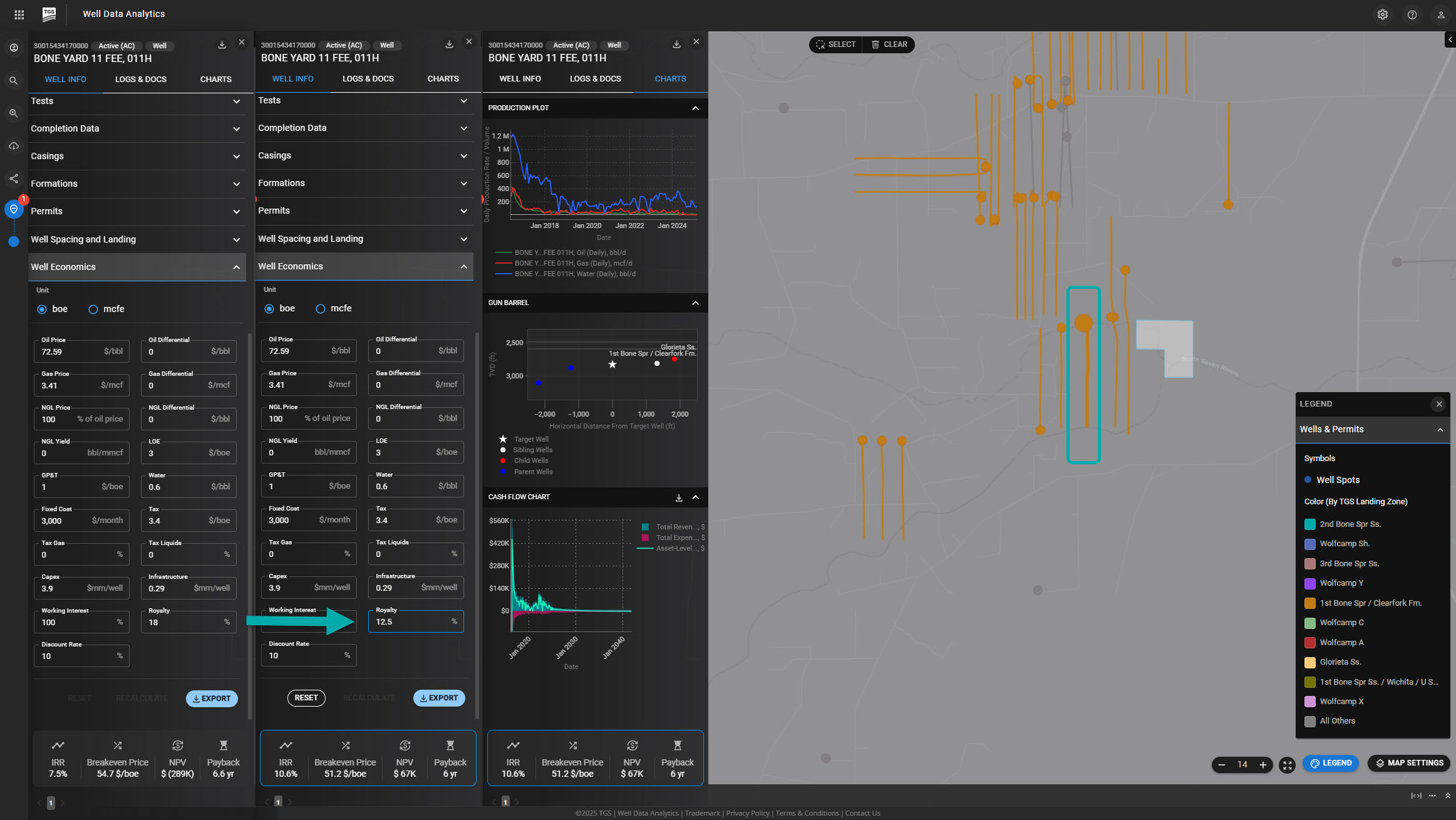
Figure 3. Example well showing the change in economic KPI’s after decreasing royalty rate to 12.5%. The Bone Yard 11 Fee 011H is indicated on the map by the teal box.
For more information about TGS Well Data Analytics or to schedule a demo, please contact us at WDPSales@tgs.com.